

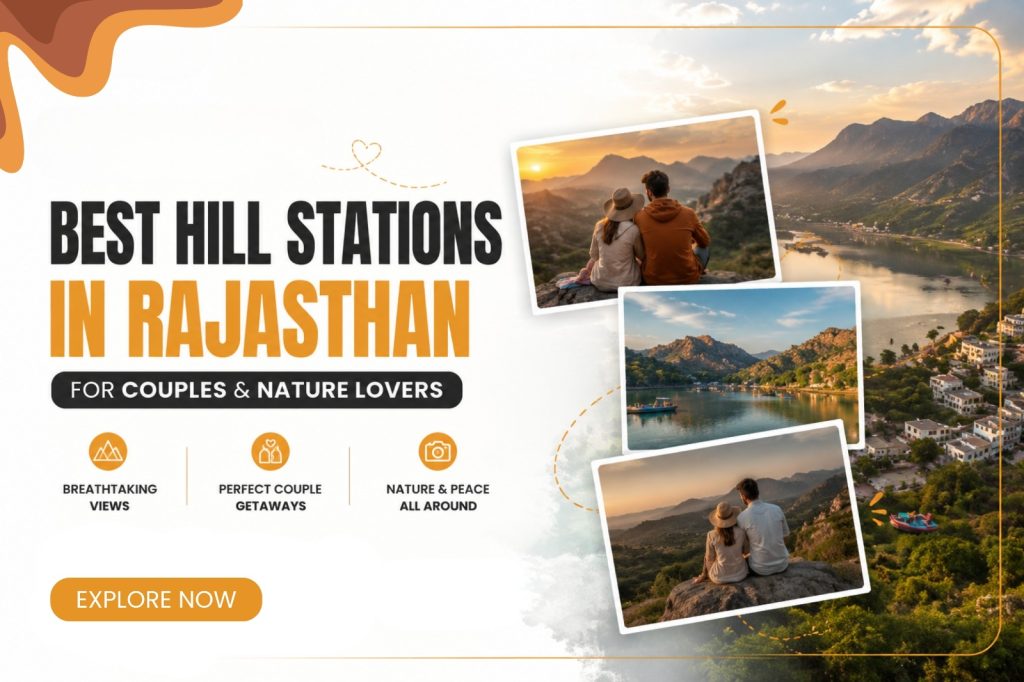
Rajasthan is famous for its grand forts, royal palaces, colorful festivals, and vast deserts. But beyond the iconic sand dunes lies another side of the state that surprises many travelers – its peaceful hill destinations. Nestled in the ancient Aravalli Range, these scenic escapes offer cool weather, lush greenery, breathtaking viewpoints, and a refreshing break from the desert heat.
For couples, these hills mean quiet lakeside evenings, sunset points, and boutique stays away from the crowds. For nature lovers, they mean forested trails, wildlife sightings, and viewpoints that rival anywhere else in North India. And whether you’re planning a family vacation, a solo adventure, or a weekend getaway with friends, Rajasthan’s hill destinations offer a genuine mix of nature, history, and romance. From the lakeside charm of Mount Abu to the leopard-dotted granite hills of Jawai and the fortress silhouette of Kumbhalgarh, each place has its own personality – they aren’t interchangeable stops on the same checklist.
This guide covers the top hill stations in Rajasthan, the best options near Jaipur, picks for couples and nature lovers specifically (plus families and solo travelers), the ideal time to visit each one, and practical tips for getting there. If you’d rather hand off the driving altogether, Royal Rajasthan Cab’s Rajasthan tour packages can string several of these hill stops into one comfortable, chauffeur-driven itinerary.
Why Visit Rajasthan’s Hill Destinations?
Although Rajasthan is known as the “Land of Kings,” its hill destinations offer a completely different travel experience. Instead of sand dunes and hot weather, you’ll find cool mountain breezes, dense forest, quiet lakes, old temples, and panoramic viewpoints.
- Pleasant weather – a welcome escape from Rajasthan’s summer heat
- Natural beauty – hills, lakes, forests, and monsoon waterfalls
- Rich heritage – forts, temples, and royal architecture set against green backdrops
- Something for everyone – family, couple, solo, or group travel
- Easy accessibility – well connected by road, rail, and nearby airports
The Top Hill Destinations
1. Mount Abu – Rajasthan’s Only Official Hill Station
Mount Abu remains the state’s most-visited mountain destination, and it earns the reputation. Evenings by Nakki Lake cool off fast even in peak summer, and the walk up to Sunset Point gets genuinely crowded around 6 PM as visitors gather to watch the sky turn orange over the Aravallis. The Dilwara Jain Temples, with their intricately carved marble ceilings, are worth setting aside a slow two hours for rather than rushing through.
Highlights: Nakki Lake, Guru Shikhar viewpoint, Dilwara Jain Temples, Sunset Point, Honeymoon Point, Mount Abu Wildlife Sanctuary
Best time to visit: October to March for the most comfortable weather; April to June if you’re specifically escaping the plains’ summer heat
Best for: Couples, families, solo travelers, first-time visitors – Mount Abu has the infrastructure to support almost any kind of trip, which is part of why it’s recommended so often in this guide
2. Guru Shikhar – Rajasthan’s Highest Peak
About 15 km from Mount Abu, Guru Shikhar is the highest point in the state. The drive up is narrow and winding, with the Aravalli range unfolding below as you climb – arguably as memorable as the summit itself.
Highlights: Guru Dattatreya Temple, sunrise and sunset viewpoints, short trekking trails, mountain-road photography
Best time to visit: October to March for clear skies; can also be visited April through June, though summer haze can dull the long-distance views
Best for: Adventure seekers, solo travelers, photographers
3. Jawai Hills – Leopards, Granite, and Luxury Camps
Jawai breaks the “hill station” mold entirely. Instead of a cool-climate town, you get dramatic granite outcrops, a dam-fed landscape, and one of India’s more accessible leopard safari circuits — leopards here live alongside local Rabari shepherd communities rather than in a fenced reserve, which makes the safaris feel unusually raw. Luxury tented camps have sprung up around the area in recent years, pairing wildlife tourism with genuine comfort.
Highlights: Leopard safari, luxury tent stays, birdwatching, riverside sunsets
Best time to visit: October to March, when leopard sightings are more reliable and daytime heat is manageable
Best for: Wildlife enthusiasts, photographers, couples wanting something less conventional
4. Kumbhalgarh – Where Nature Meets Heritage
Kumbhalgarh Fort, the second-longest continuous wall in the world after the Great Wall of China, cuts across forested hills for over 36 km. Beyond the fort itself, the surrounding wildlife sanctuary and nature trails make this a rare combination of serious history and genuine greenery.
Highlights: Kumbhalgarh Fort, Kumbhalgarh Wildlife Sanctuary, nature trails, evening light-and-sound show
Best time to visit: October to March
Best for: History lovers, families, weekend road-trippers
More Hill Destinations Worth Exploring
5. Ranakpur – A Peaceful Retreat
Surrounded by forest, Ranakpur is best known for its Jain temple complex — a vast structure supported by over 1,400 intricately carved marble pillars, no two exactly alike. It’s a natural stop for travelers moving between Udaipur and Jodhpur.
Best time to visit: October to March | Best for: Nature lovers, families, spiritual travelers
6. Sajjangarh (Monsoon Palace), Udaipur
Perched above Udaipur, Sajjangarh isn’t an official hill station, but it’s one of the region’s best hilltop viewpoints – the palace overlooks the city’s lakes and the Aravallis in a single sweep, especially striking at sunset. Its ideal viewing window runs July through February, spanning monsoon and winter, when skies are clearest for the long view down to the lakes. It slots naturally into a broader Udaipur tour package alongside City Palace and Lake Pichola.
Best for: Couples, families, photographers
7. Achalgarh
A short drive from Mount Abu, Achalgarh pairs an old fort with the Achaleshwar Mahadev Temple and quiet walking trails — a good half-day add-on to a Mount Abu itinerary rather than a standalone destination.
Best time to visit: October to March | Best for: History lovers looking for a quieter alternative to Mount Abu’s main circuit
8. Goram Ghat – The Hidden Escape
Goram Ghat is for travelers who want to go off the beaten path. It’s known for a winding narrow-gauge railway route through the hills, and during monsoon the surrounding landscape turns dramatically green with seasonal waterfalls.
Best time to visit: July to September | Best for: Offbeat travelers, monsoon road trips
Quick Comparison
| Destination | Best For | Best Time to Visit | Ideal Stay |
| Mount Abu | Couples, Families | October–March | 2–3 Days |
| Guru Shikhar | Trekking & Photography | October–March | Half Day |
| Jawai Hills | Wildlife & Luxury Camping | October–March | 2 Days |
| Kumbhalgarh | Heritage & Nature | October–March | 1–2 Days |
| Ranakpur | Spiritual & Relaxation | October–March | 1 Day |
| Sajjangarh | Scenic Views & Photography | July–February | Half Day |
| Goram Ghat | Offbeat & Monsoon Escapes | July–September | 1 Day |
Best Hill Stations Near Jaipur
Planning to start from the Pink City? Pair a day or two of our Jaipur sightseeing tour with one of these hill escapes for a fuller trip.
| Destination | Distance from Jaipur | Travel Time | Best For |
| Mount Abu | 495 km | 8–9 hours | Family holidays & couples |
| Kumbhalgarh | 345 km | 6–7 hours | Heritage & nature |
| Ranakpur | 390 km | 7 hours | Relaxation & spiritual tourism |
| Sajjangarh (Udaipur) | 395 km | 7 hours | Scenic views & photography |
| Guru Shikhar | 510 km | 9 hours | Adventure & sightseeing |
Planning tips:
- Start early in the morning for a comfortable drive
- Budget 2–3 days if you want to combine nearby attractions rather than rushing
- Travel between October and March for the most pleasant weather across the board
- If visiting in summer, choose accommodation with hill or lake views to make the heat more bearable
Picking a Destination by Travel Style
Couples: Mount Abu (Nakki Lake, Sunset Point, cozy cafés) or Jawai Hills (luxury camps and dramatic landscapes) for something more distinctive. Sajjangarh’s sunset-over-Udaipur view is worth a half-day detour if you’re already in the city.
Families: Mount Abu covers the most ground in one trip – boating, wildlife, temples, and markets. Kumbhalgarh suits families who want fort exploration mixed with outdoor time; Ranakpur is a gentler, more relaxed stop.
Solo travelers: Mount Abu’s tourism infrastructure (transport, cafés, marked walking routes) makes it the easiest solo trip. Guru Shikhar rewards solo hikers and photographers who don’t mind an early start; Jawai suits solo travelers drawn specifically to wildlife.
Nature lovers: Guru Shikhar, Ranakpur, and Goram Ghat, in roughly that order depending on whether you want altitude, temple architecture, or monsoon greenery.
Wildlife enthusiasts: Jawai Hills for leopards, Mount Abu and Kumbhalgarh for their wildlife sanctuaries.
Best Time to Visit, Season by Season
Summer (April–June): Mount Abu is the standout choice – its elevation genuinely cools things down compared to the plains. Guru Shikhar is a solid second option, and by June the surrounding hills start greening up with the season’s first showers.
Monsoon (July–September): This is when the Aravallis look their best. Goram Ghat’s waterfalls and Sajjangarh’s misty viewpoints are monsoon specialties; Jawai’s landscape also turns unexpectedly lush.
Winter (October–March): The most reliable season across every destination on this list — clear skies, comfortable daytime temperatures, and the best visibility for viewpoints like Guru Shikhar and Sajjangarh.
Things to Do Beyond Sightseeing
- Boating on Nakki Lake – a quiet evening ritual in Mount Abu
- Leopard safari at Jawai Hills, best attempted early morning or late afternoon
- Fort and temple visits – Dilwara, Kumbhalgarh Fort, Achalgarh Fort, Guru Dattatreya Temple
- Wildlife spotting at Mount Abu and Kumbhalgarh sanctuaries
- Local food – dal baati churma, gatte ki sabzi, ker sangri, laal maas, malpua, rabdi
- Handicraft shopping – marble artifacts, handwoven textiles, wooden crafts, traditional jewelry
Getting There
By road: The most flexible option, especially for combining multiple stops. A Rajasthan car rental with a driver who knows these hill roads is worth it over self-driving, particularly on the winding stretches up to Guru Shikhar and Sajjangarh.
- Jaipur → Mount Abu: 495 km
- Udaipur → Mount Abu: 165 km
- Udaipur → Kumbhalgarh: 85 km
- Udaipur → Ranakpur: 95 km
- Jodhpur → Jawai Hills: approx. 160 km
For a small family or couple a sedan is enough, but larger groups heading to Jawai’s luxury camps or a multi-family Kumbhalgarh trip may want to check the full range of fleets, from SUVs up to tempo travellers.
By train: Nearest stations are Abu Road, Udaipur City, Falna, Jaipur Junction, and Jodhpur Junction — taxis and buses run from all of them.
By air: For Mount Abu, Udaipur’s Maharana Pratap Airport (~185 km) is the closest option, followed by Ahmedabad’s Sardar Vallabhbhai Patel International Airport. Jaipur and Jodhpur airports serve the rest of the region depending on your route.
Conclusion
Rajasthan is much more than forts, deserts, and palaces. Tucked into the Aravalli Range are hill destinations that each offer something distinct: Mount Abu’s all-round convenience, Jawai’s wild edge, Kumbhalgarh’s scale, and Ranakpur’s quiet. Pick based on what you actually want from the trip – history, wildlife, romance, or just cooler air – rather than defaulting to the most famous name on the list. Plan around the season, book ahead during peak months, and travel a little lighter on the itinerary than you think you need to.
Once you’ve picked your route, book a cab with Royal Rajasthan Cab and let a local driver handle the winding hill roads while you enjoy the view.
Frequently Asked Questions